
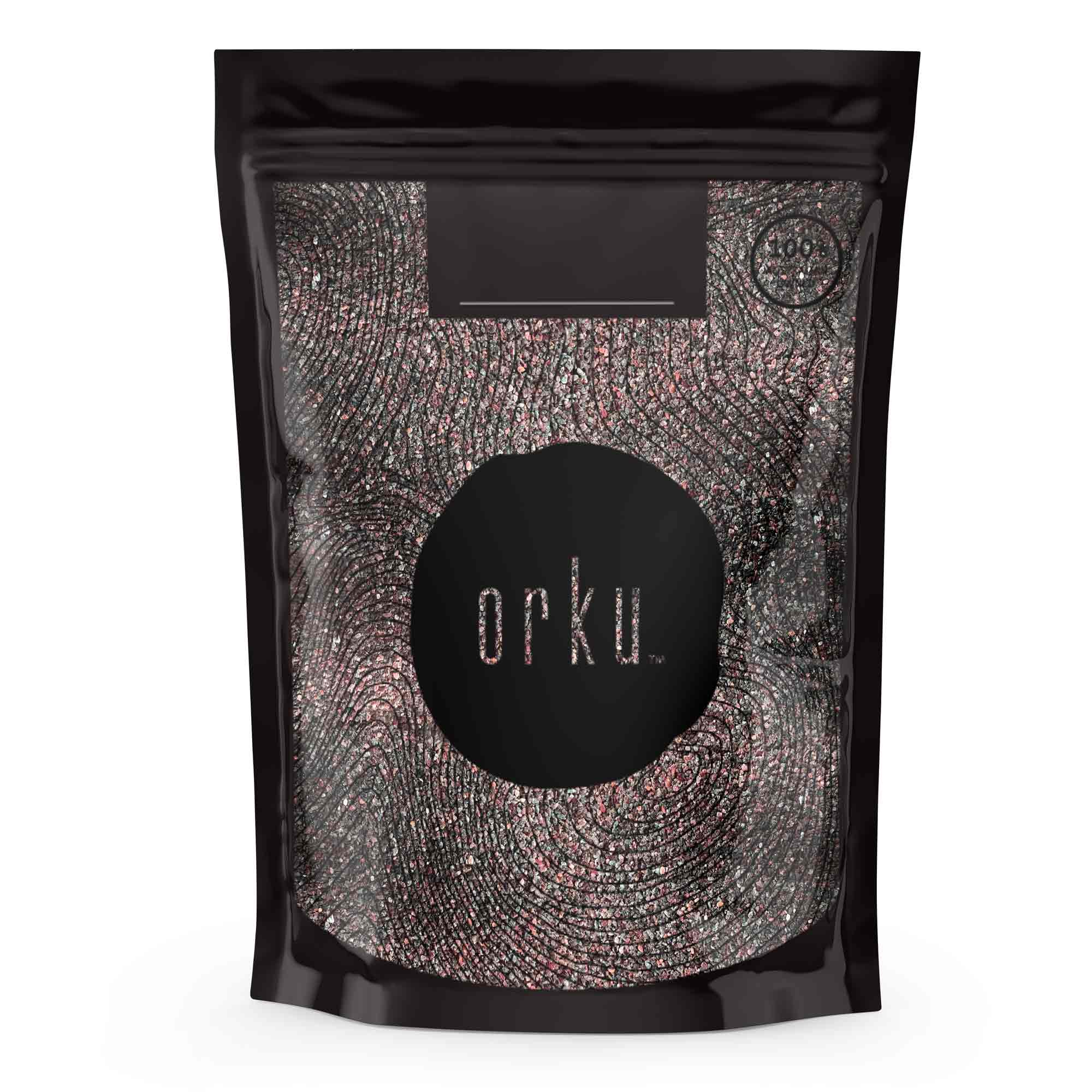
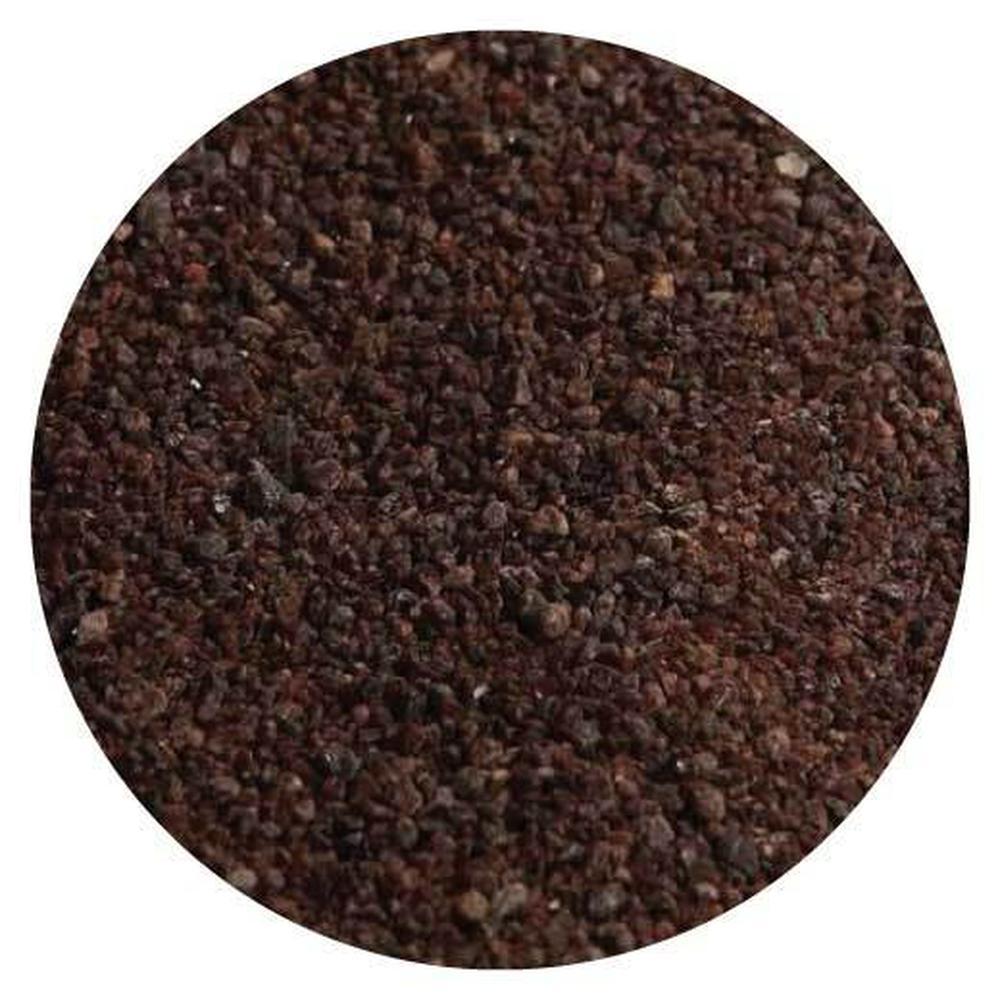
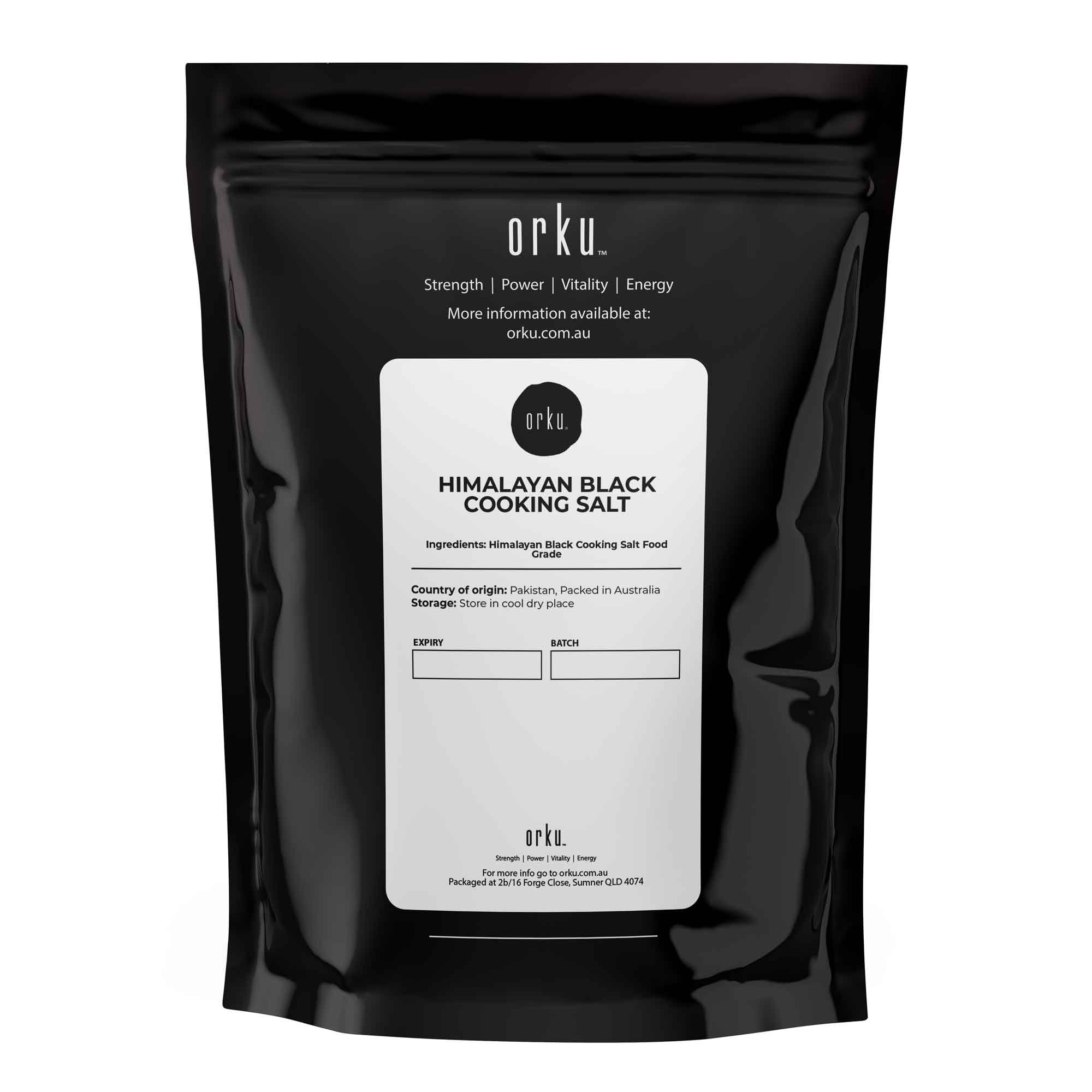
1Kg Cooking Black Salt Himalayan – Medium Grain Vegan Egg Kala Namak
AUD $64.00

In stock
AUSTRALIA-WIDE TRACKABLE SHIPPING
Australian Stock. Reliable & Trackable Shipping
VIC
3 to 8 business days
NSW – SA – ACT – QLD
5 to 10 business days
WA – NT – TAS
7 to 14 business days
1Kg Cooking Himalayan Black Salt in resealable pouch 1-2mm.
Our black salt “Kala Namak” is made from a base of natural Himalayan rock salt of Pakistan. Kala namak consists primarily of sodium chloride and trace impurities of sodium sulfate, sodium bisulfate, sodium bisulfite, sodium sulfide, iron sulfide and hydrogen sulfide.
Sodium chloride provides kala namak with its salty taste, iron sulfide provides its dark violet hue, and all the sulfur compounds give kala namak its slight savory taste as well as a highly distinctive smell, with hydrogen sulfide being the most prominent contributor to the smell. The acidic bisulfates/bisulfites contribute a mildly sour taste. Although hydrogen sulfide is toxic in high concentrations, the amount present in kala namak used in food is small and thus its effects on health are negligible. Hydrogen sulfide is also one of the components of the odour of rotten eggs and boiled milk. Kala namak is appreciated by some vegans in dishes that mimic the taste of eggs. It is used, for example, to season tofu or avocado to mimic an egg salad or deviled eggs.
How is Himalayan Natural black Salt Made?
Natural rock salt is acquired from salt mines of Pakistan. Then the big lumps are broken into small pieces and put into large vessel of furnace. Some herbs like Pepper, Rosemary, Rue, Cinnamon and Harrad etc are mixed into rock salt in certain specific ratios into vessel of furnace then the whole ingredients including rock salt are melted on a high temperature in a furnace for a specific time. When all this mixture is converted into liquid form with the help of high temperatures then this liquid is poured into many small vessels of about 30-40kgs each and let it cool. It takes many hours to become cold and to convert in solid form again. When the material of the vessels becomes solid then it is taken out of these vessels and broken into small lumps. Now the black salt is ready for use. Factories make different grades of black salt. Some people want black salt in lump form, some demands in granulate or fine form
When and where to use Black Salt?
It is mostly used in Asian countries for different purposes like as edible salt because it is highly digestive as well as it is used in some medicines. It is also used for animals again for digestion purposes.
Kala namak is used extensively in South Asian cuisines of Bangladesh, Nepal, India and Pakistan as a condiment or added to chaats, chutneys, salads, all kinds of fruits, raitas and many other savoury Indian snacks. Chaat masala, an Indian spice blend, is dependent upon black salt for its characteristic sulfurous hard-boiled-egg aroma. Those who are not accustomed to black salt often describe the smell as similar to rotten eggs. Kala namak is appreciated by some vegans in dishes that mimic the taste of eggs. It is used, for example, to season tofu or avocado to mimic an egg salad or deviled eggs.
Kala namak is considered a cooling spice in Ayurveda and is used as a laxative and digestive aid. It is also believed to relieve flatulence and heartburn.
Features
1Kg Cooking Himalayan Black Salt in resealable pouch 1-2mm.
Our black salt “Kala Namak” is made from a base of natural Himalayan rock salt of Pakistan. Kala namak consists primarily of sodium chloride and trace impurities of sodium sulfate, sodium bisulfate, sodium bisulfite, sodium sulfide, iron sulfide and hydrogen sulfide.
Sodium chloride provides kala namak with its salty taste, iron sulfide provides its dark violet hue, and all the sulfur compounds give kala namak its slight savory taste as well as a highly distinctive smell, with hydrogen sulfide being the most prominent contributor to the smell. The acidic bisulfates/bisulfites contribute a mildly sour taste. Although hydrogen sulfide is toxic in high concentrations, the amount present in kala namak used in food is small and thus its effects on health are negligible. Hydrogen sulfide is also one of the components of the odour of rotten eggs and boiled milk. Kala namak is appreciated by some vegans in dishes that mimic the taste of eggs. It is used, for example, to season tofu or avocado to mimic an egg salad or deviled eggs.
How is Himalayan Natural black Salt Made?
Natural rock salt is acquired from salt mines of Pakistan. Then the big lumps are broken into small pieces and put into large vessel of furnace. Some herbs like Pepper, Rosemary, Rue, Cinnamon and Harrad etc are mixed into rock salt in certain specific ratios into vessel of furnace then the whole ingredients including rock salt are melted on a high temperature in a furnace for a specific time. When all this mixture is converted into liquid form with the help of high temperatures then this liquid is poured into many small vessels of about 30-40kgs each and let it cool. It takes many hours to become cold and to convert in solid form again. When the material of the vessels becomes solid then it is taken out of these vessels and broken into small lumps. Now the black salt is ready for use. Factories make different grades of black salt. Some people want black salt in lump form, some demands in granulate or fine form
When and where to use Black Salt?
It is mostly used in Asian countries for different purposes like as edible salt because it is highly digestive as well as it is used in some medicines. It is also used for animals again for digestion purposes.
Kala namak is used extensively in South Asian cuisines of Bangladesh, Nepal, India and Pakistan as a condiment or added to chaats, chutneys, salads, all kinds of fruits, raitas and many other savoury Indian snacks. Chaat masala, an Indian spice blend, is dependent upon black salt for its characteristic sulfurous hard-boiled-egg aroma. Those who are not accustomed to black salt often describe the smell as similar to rotten eggs. Kala namak is appreciated by some vegans in dishes that mimic the taste of eggs. It is used, for example, to season tofu or avocado to mimic an egg salad or deviled eggs.
Kala namak is considered a cooling spice in Ayurveda and is used as a laxative and digestive aid. It is also believed to relieve flatulence and heartburn.
Shipping Policy
Warehousing
All our products for sale are warehoused and shipped from Australia.
Handling
Orders are dispatched within 1 – 2 Business Days.
Shipping
We use Australia Post, Aramex, Allied Express, Toll, Hunter Express, Couriers Please and iMile. We only use courier options that provide shipment tracking for our customers.
Domestic Shipping (Australia)
⊕ Standard Shipping (Tracking Provided)
All standard national deliveries are expected to be delivered within:
3 to 8 business days (VIC)
5 to 10 business days (NSW, SA, ACT & QLD)
7 to 14 business days (WA, NT & TAS) except for holidays such as Christmas and New Year’s.
International Shipping
Currently, we do not ship internationally.
Tracking of orders
All our customer orders are trackable with shipping codes. Once your order is dispatched you will receive an email with your shipping tracking information. This can be used to trace the progress of the shipment and delivery of your order from the courier service.
Please note your tracking may take up to 24-48 hours to become available on the courier’s website.
Did you order multiple items?
For faster delivery, if you ordered more than one item, you may receive different tracking numbers as your items may be dispatched from different warehouses. Your order may not all be dispatched together and you may receive multiple deliveries at no additional cost to you.
Refund & Returns Policy
Returns
We accept returns. Please contact our customer service team immediately via email to admin@saffrosol.com based on your eligibility for the following:
- You changed your mind within 30 days from the date of purchase and wish to request a return. Please check the eligibility criteria below.
- Your product was damaged during transit. You must notify us right away via email to admin@saffrosol.com
- You wish to make a Warranty Claim for any Ultrasonic Aroma Diffuser product you have purchased.
This policy applies in addition to other rights and remedies you may have under the Australian Consumer Law or any other law.
You changed your mind and wish to request a return
For change of mind purchases, our returns policy lasts 30 days from the date of purchase. If 30 days have gone by since your purchase, unfortunately, we can’t offer you a refund.
To be eligible for a return, your item must be unused and in the same condition that you received it. It must also be in the original packaging.
To complete your return, we require a receipt or proof of purchase. Please do not send your purchase back to the manufacturer.
To return your product, please first email us at admin@saffrosol.com and we will provide you with a return address.
You will be responsible for paying for your own shipping costs for returning your item. The initial shipping costs are non-refundable. If you receive a refund, the cost of the initial shipping will be deducted from your refund.
If you are shipping an item over $75, you should consider using a trackable shipping service or purchasing shipping insurance. This will guarantee that we will receive your returned item.
Once your return is received and inspected, we will send you an email to notify you that we have received your returned item. We will also notify you of the approval or rejection of your refund.
If you are approved, then your refund will be processed, and a credit will automatically be applied to your original method of payment, generally within 2 to 10 Business days depending on your financial institution. We cannot refund your payment to another payment method.
Late or missing refunds (if applicable)
If you haven’t received a refund yet, first check your bank account again.
Then contact your credit card company, it may take some time before your refund is officially posted. Next, contact your bank. There is often some processing time before a refund is posted. If you’ve done all of this and you still have not received your refund yet, please contact us at admin@saffrosol.com
Exchanges
We do not offer exchanges. However you may return items within 30 days of purchase (if eligible under the policy) and purchase the items you do want.


 Verified Review